Silk Screen vs DTF Printing
Comparison of two most popular textile printing technologies. We analyze which technology is more cost-effective by cost, quality and timelines.
Two main printing technologies for merch
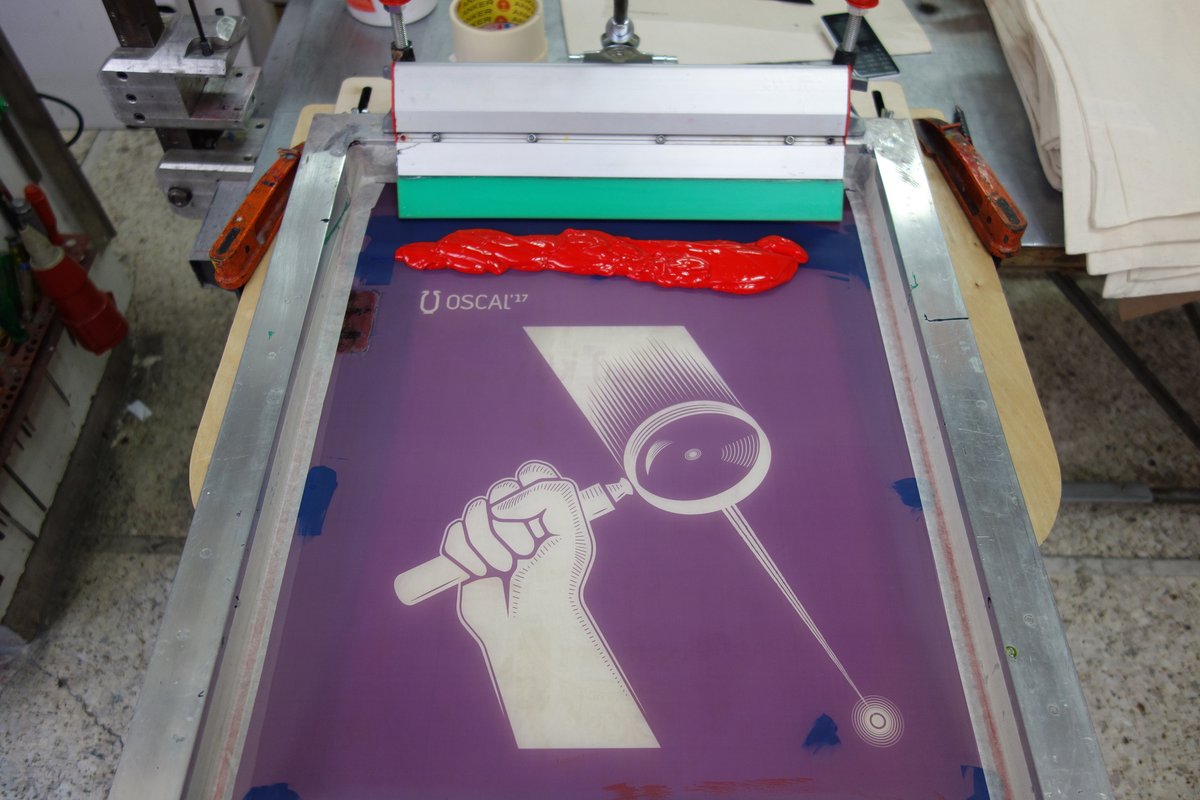
Silk screen (screen printing) is a classic method of screen printing. Ink is pushed through mesh onto material. Proven over decades, gives bright colors and high durability.
DTF (Direct to Film) is a modern direct transfer technology. Image is printed on special film, then transferred to fabric by heat press. Flexibility of digital process.
Both technologies are widely used, but each is optimal in its own scenarios.
Direct Comparison
Key differences between silk screen and DTF
| Criteria | Silk Screen | DTF |
|---|---|---|
| Minimum quantity | 50 pcs | 10 pcs |
| Number of colors | Up to 6–8 | Full color |
| Durability | 30–50 washes | 50–70 washes |
| Texture | Thin film | Soft film |
| Cost structure | Screens (fixed cost) | No screens |
| Price at 50 pcs | Low | Medium |
| Price at 500 pcs | Very low | Low |
| Timeline | 5–10 business days | 3–7 business days |
| Personalization | No (one design) | Yes (different names/numbers) |
When to choose silk screen
Optimal scenarios for screen printing
Large Runs
From 50 pieces — silk screen gives minimum cost per unit. At 200+ pcs the difference is substantial.
Simple Graphics
1–4 colors, logos, text — ideal candidates. For simple design silk screen is the best choice.
Budget Project
When minimum cost per unit is important and design complexity is low.
Cotton Fabrics
Silk screen on cotton gives classic, "breathable" result. Perfect for t-shirts and hoodies.
Unified Design
When entire run is the same logo on all items without personalization.
Corporate Form
Uniforms, employee merch — runs from 50, simple logos, emphasis on durability.
When to choose DTF
Optimal scenarios for DTF printing
Small Runs
10–30 pieces — only DTF. Silk screen requires screens that only pay off on large runs.
Full-Color Designs
Photographs, gradients, complex illustrations — DTF prints without palette limitations.
Personalization
Different names, numbers, inscriptions in one order — DTF doesn't require re-setup.
Fast Launch
3–5 days instead of 7–10. For urgent orders — critical advantage.
Dark Fabrics
DTF holds better on dark textiles than sublimation. Works on any color.
Different Sizes
One design on different sizes (S–XXL) without cost change. Print scales.
Technology selection calculator
If quantity ≤ 30 pieces
Definitely DTF. Silk screen is impractical — screen costs will drive price per unit up 2–3 times.
If quantity 50–100 pieces
Depends on design: simple logo (1–3 colors) — silk screen is cheaper; full-color design — DTF is more economical.
If quantity 100–300 pieces
Silk screen is better with simple design. Cost per unit difference — 15–25%.
If quantity 300+ pieces
Silk screen — minimum cost per unit. DTF is also acceptable, but benefit is less.
* All recommendations are approximate. Exact calculation — upon request considering design.
FAQ
Why is DTF more expensive at large runs?
DTF doesn't have economies of scale — cost per unit is roughly the same at 10 or 500 pieces. Silk screen has fixed screen costs but very low variable cost. At large runs silk screen wins.
Can you print photographs with silk screen?
Technically possible (CMYK silk screen), but requires 4 screens per color and complex preparation. For photo printing DTF is better — it's designed for full-color images.
Which method is better for conference merch?
Depends on quantity: 30–50 t-shirts for speakers — DTF. 200+ for all participants — silk screen. Also DTF allows personalization (speaker names).
Does DTF hold worse on dark fabrics?
Actually the opposite — DTF works better on dark materials than sublimation. White base in DTF film ensures brightness on any fabric color.
Can I combine silk screen and DTF?
Yes, this is a popular combination: DTF for main image + silk screen for additional colors. But usually one method is chosen for the task.
Select technology for your project
Send order parameters — we'll calculate cost and recommend method